Beautiful Feet · 1:26 film

Hilary of Poitiers

Hear what your brother means

Read the narration

Hilary of Poitiers believed that Jesus Christ was truly God before he learned the disputed word bishops used to defend that truth. He explained this while writing from exile.

The churches of the fourth century were divided over how to speak about the Son and the Father. Hilary wanted Christians to confess Christ truthfully. He also knew that hearing an unfamiliar expression didn't always tell you what someone believed.

In his work On the Councils, he explained rival formulas and asked his readers to consider what the words meant. He wanted bishops using different language to recognize where they shared a faithful confession of the Son's divine nature.

That work took patience. He asked for prayer as he offered his writing to fellow Christians.

Romans calls us to welcome one another as Christ has welcomed us, and to glorify God together. We can hold firmly to the truth while taking time to understand another person.

When a Christian's words trouble you, ask what they mean. Give them room to explain. Then speak clearly about what you believe. That kind of attention can help us pursue truth together with love.

Christ has welcomed us by grace. May the way we listen and speak help a brother or sister grow in him.

Next in Beautiful Feet

Dora Yu →

Go deeper

History & further reading

Return to the story ↑

Listening carefully in a doctrinal dispute

Hilary of Poitiers wrote On the Councils amid fourth-century disputes over how the church should confess the Son’s relation to the Father. His concern for truth included careful attention to what another person meant by the language being used.

In sections 84–92, he considers how terms can be understood or misunderstood and urges patience toward those whose intention may be sound. This is a particular intervention within a serious doctrinal controversy. It should not be turned into a claim that every theological difference is merely verbal.

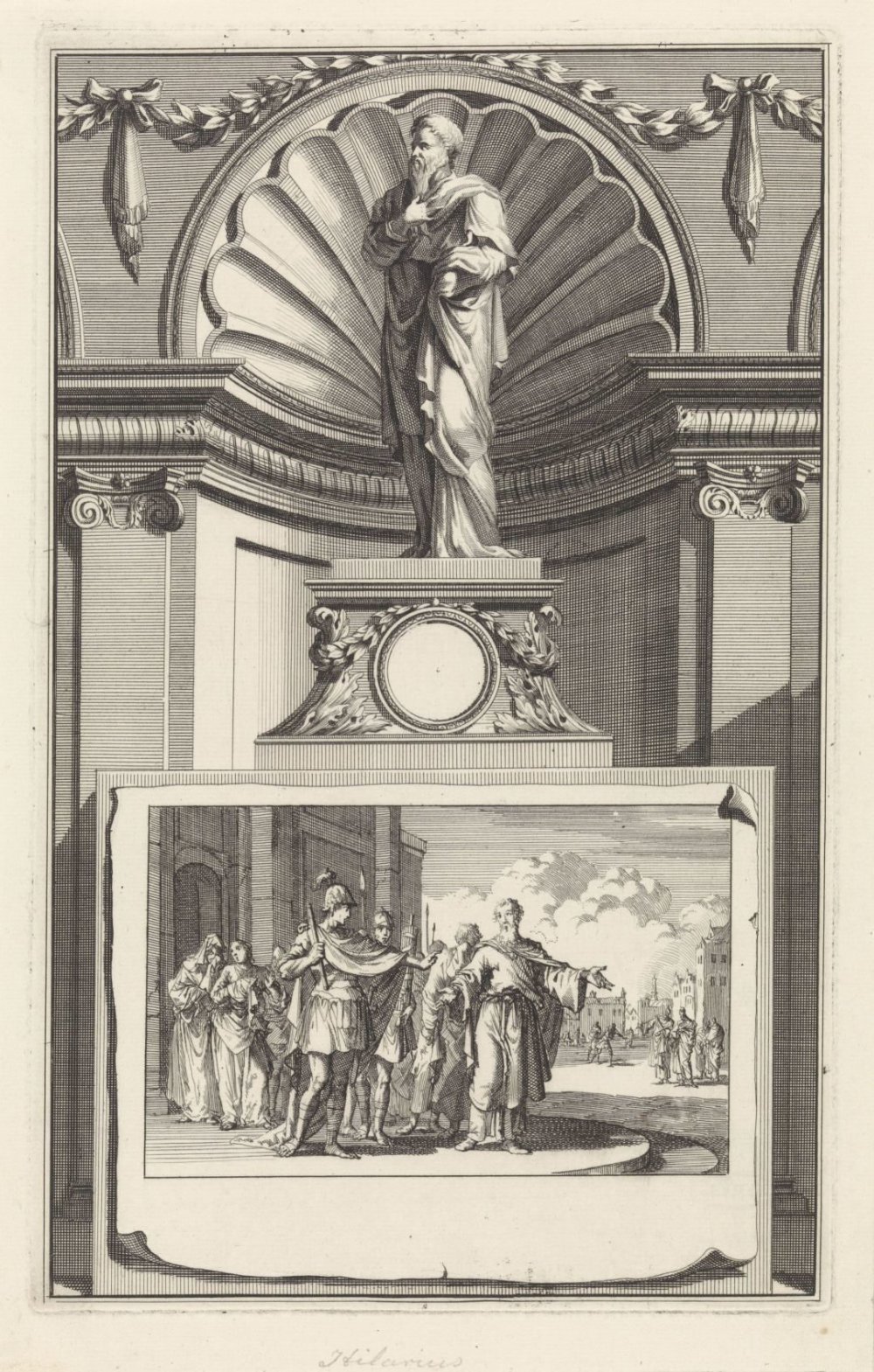
Hilary’s exile belongs to the reign of Constantius II. The later print shown here illustrates how subsequent Christians remembered him; it is neither a contemporary likeness nor proof of the setting it imagines. Romans 12’s call to humility and harmony offers a related challenge to our own speech.

From the historical record

Photographs, art & documents

Open an image to look more closely. Dates and captions distinguish historical records from later interpretations.

1698 print with a figure of Hilary above an imagined departure scene.View full image ↗

Hilary remembered in a 1698 print. This is a later imagined likeness and exile scene, not a contemporary portrait. His historical exile began under Constantius II.

Jan Luyken; Zacharias Chatelain II; after Jan Goeree · Rijksmuseum RP-P-1896-A-19368-1288

Historical image