Beautiful Feet · 1:07 film

Michael Sattler

The love he asked them to keep

Read the narration

Michael Sattler wrote to a church he couldn't visit. He was in prison, and the people at Horb were still on his mind.

In his letter, he urged them to love patiently, help those in need, and care for weaker members. He asked them to remember the prisoners in prayer.

His concern reached into his own household. If he died, he wanted the church to care for his wife. He placed that need before people he loved, while the outcome was still uncertain.

He also wished he could keep working. Yet he trusted that the Lord could raise up another worker.

The letter lets us see a servant of Christ who needed the very care he urged others to give. The fellowship he described included people receiving help as well as offering it.

When someone you love can no longer do what they once did, keep making room for them. Pray with them. Ask what would help. Our fellowship in Christ includes the days when we need others to carry more of the work.
Next in Beautiful Feet

Satoko Kitahara →

Go deeper

History & further reading

Return to the story ↑

A letter about love from confinement

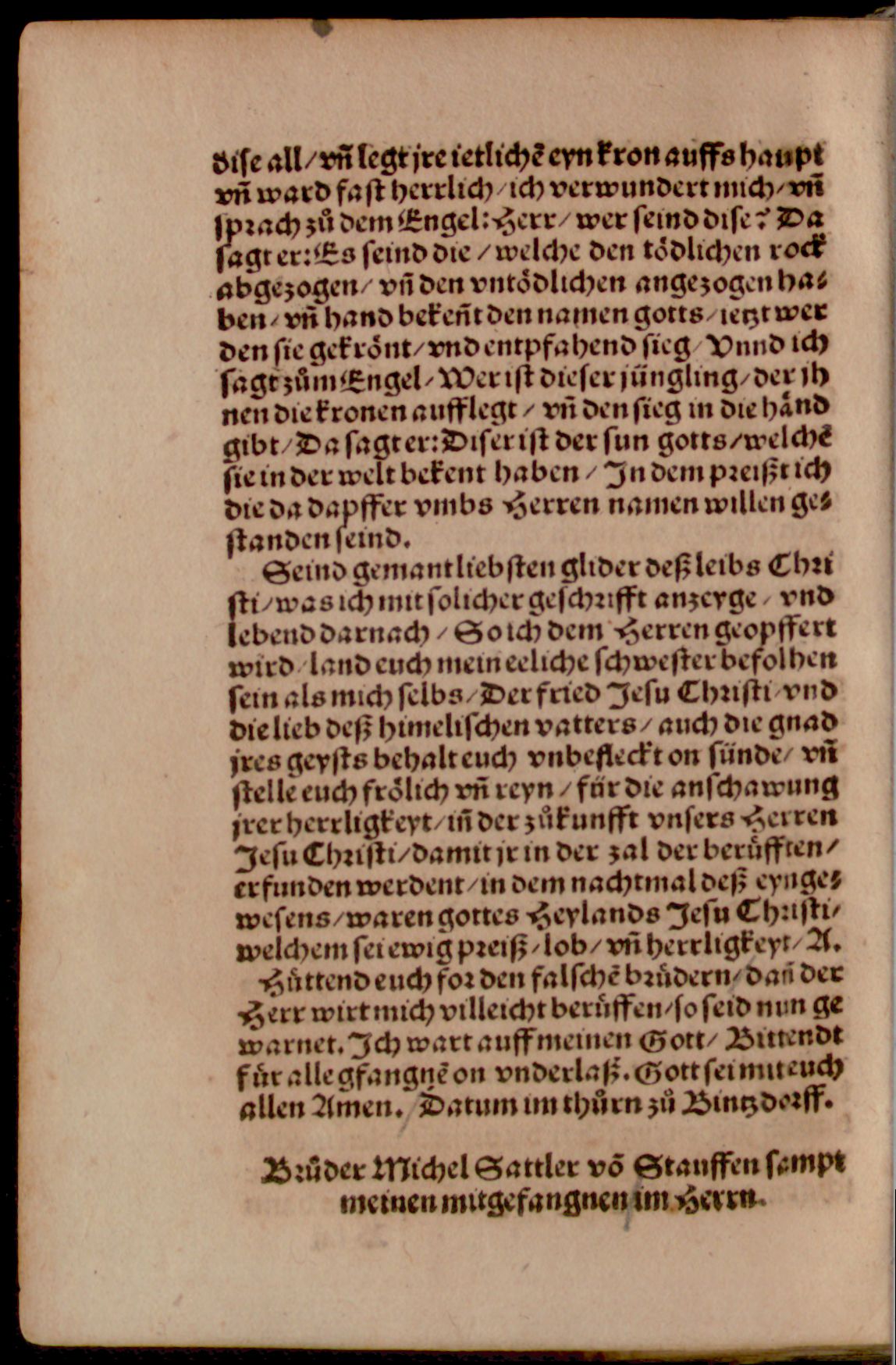
In a letter to the congregation at Horb, Michael Sattler calls the believers to love and makes a practical request concerning care for his wife. The counsel belongs to the period of his confinement before his execution in 1527. His wife Margaretha was also executed shortly afterward.

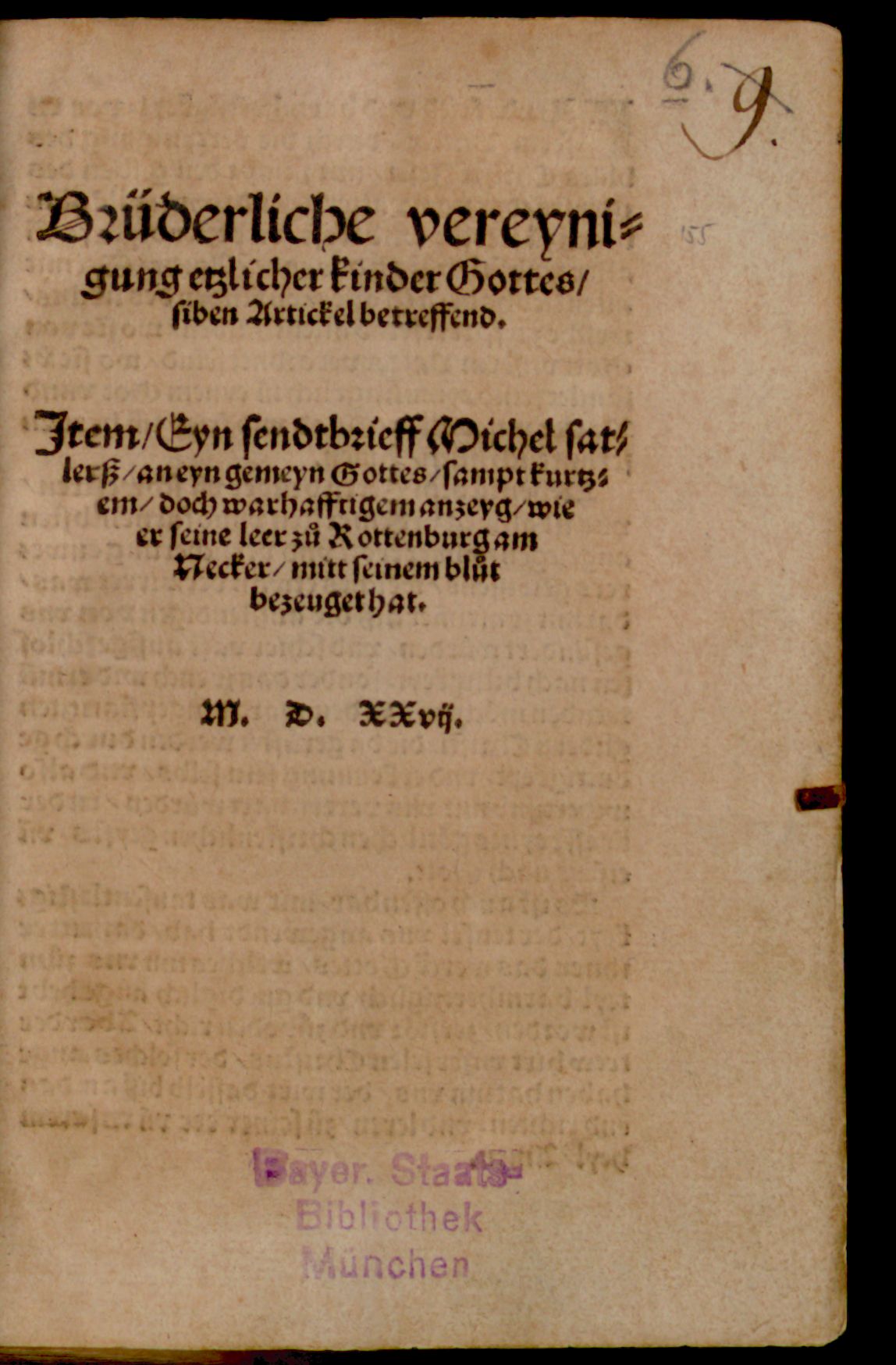
The letter’s concern for community and household care gives us more to remember than the manner of his death. An early printed volume dated 1527 preserves both the Schleitheim confession and the Horb letter. They are distinct texts within the same surviving volume; neither should be shown as an autograph.

Romans 12 helps us reflect on love that takes concrete responsibility under pressure. Honoring Sattler’s witness does not require treating every theological position associated with him as the shared confession of all Christians.

From the historical record

Photographs, art & documents

Open an image to look more closely. Dates and captions distinguish historical records from later interpretations.

Title page of an early printing of the Schleitheim confession associated with Michael Sattler.View full image ↗

An early printed volume dated 1527, associated with the Schleitheim confession. This is historical print rather than Sattler’s handwriting. The volume also preserves the Horb letter.

Bayerische Staatsbibliothek / MDZ · bsb00027178 · Res/Polem. 875, Beibd. 6
Final page of the printed Horb letter, with its request concerning Sattler’s wife and printed signature.View full image ↗

The final page of the Horb letter in the same early printed volume. The closing passage asks for care of Sattler’s wife. A printed text, not an autograph signature.

Bayerische Staatsbibliothek / MDZ · bsb00027178 · scan 24

Historical image