




Swipe to explore the illustrated story.
Saved stories stay on this device.
Read the story
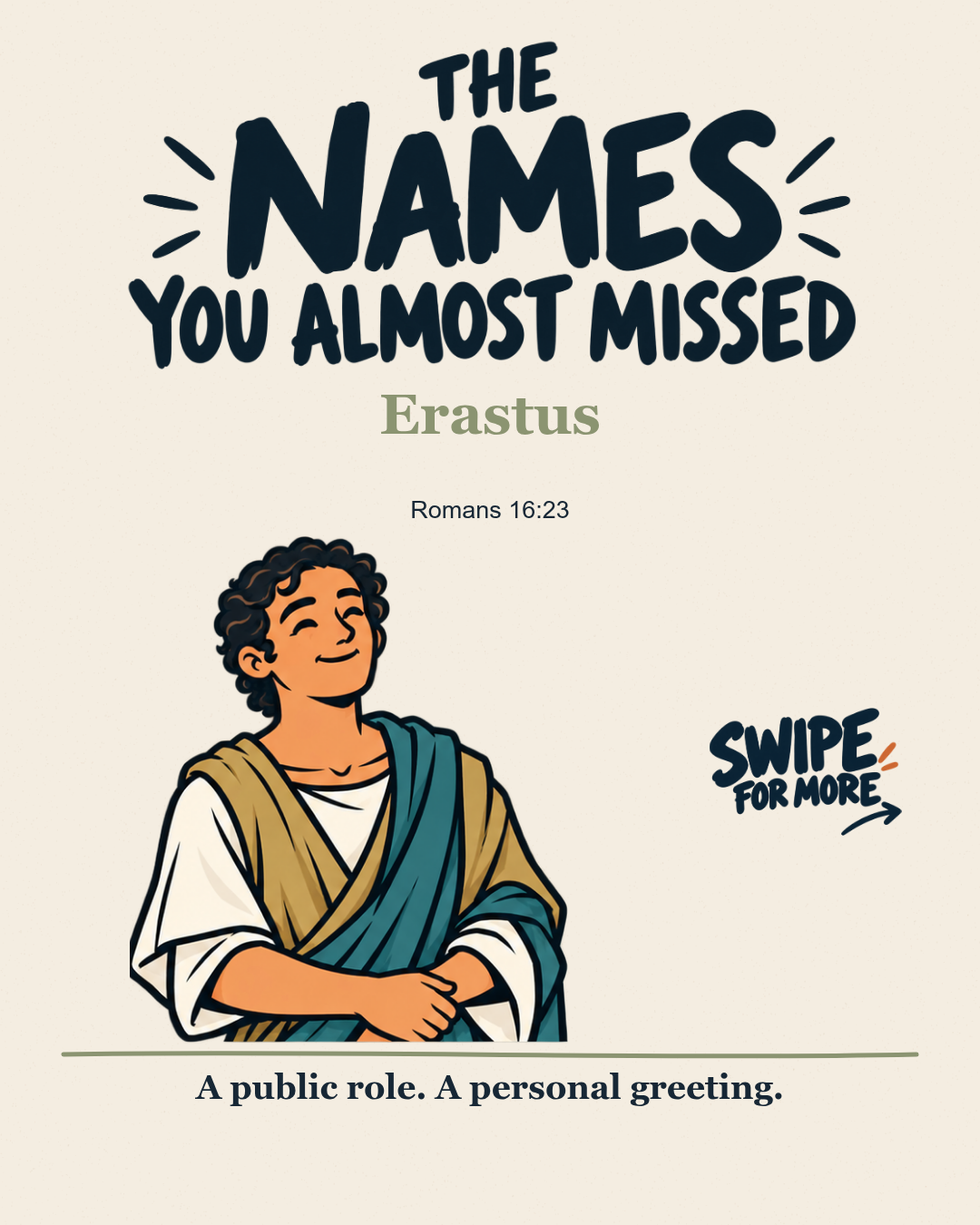
A public role. A personal greeting.
Erastus • Romans 16:23
Illustrative portrait / group
Read the greeting.
“Erastus, the city treasurer”
Romans 16:23 (ESV) • excerpt
Paul names a civic worker.
The ESV describes Erastus as the city treasurer. He joins the greeting from the sending network rather than appearing as another Roman recipient.
Romans 16:23; see source notes
The precise office is debated.
The Greek civic title has prompted different administrative identifications. Our English translation is not a complete Roman job description.
Romans 16:23; see source notes
A pavement names an Erastus.
A Corinth inscription records a benefaction connected with an aedileship. Whether that Erastus is Paul’s Erastus depends on debated dating, office and identification questions.
Historical context and limits • source notes
Read it within the larger letter.
The greeting can prompt us to notice service connected with civic work. It does not prove how Erastus carried out his duties or settle a modern political program.
Romans 12:4–8; 16:23 • comparison
Remember someone whose care mattered.
Thank someone whose conscientious work benefits a wider community. Speak of integrity or care you have actually witnessed.
A present-day invitation
Whose name comes to mind?
Who has served your wider community in a way you are grateful for? Share a first name and a true memory, if you’d like. A private thank-you matters, too.
Names matter because people matter.
Explore the book
Romans — The Gospel of God and the People He Calls by Name. Landon Key. romansbook.com
Explore the book • romansbook.com