

Swipe to explore the illustrated story.
Saved stories stay on this device.
Read the story
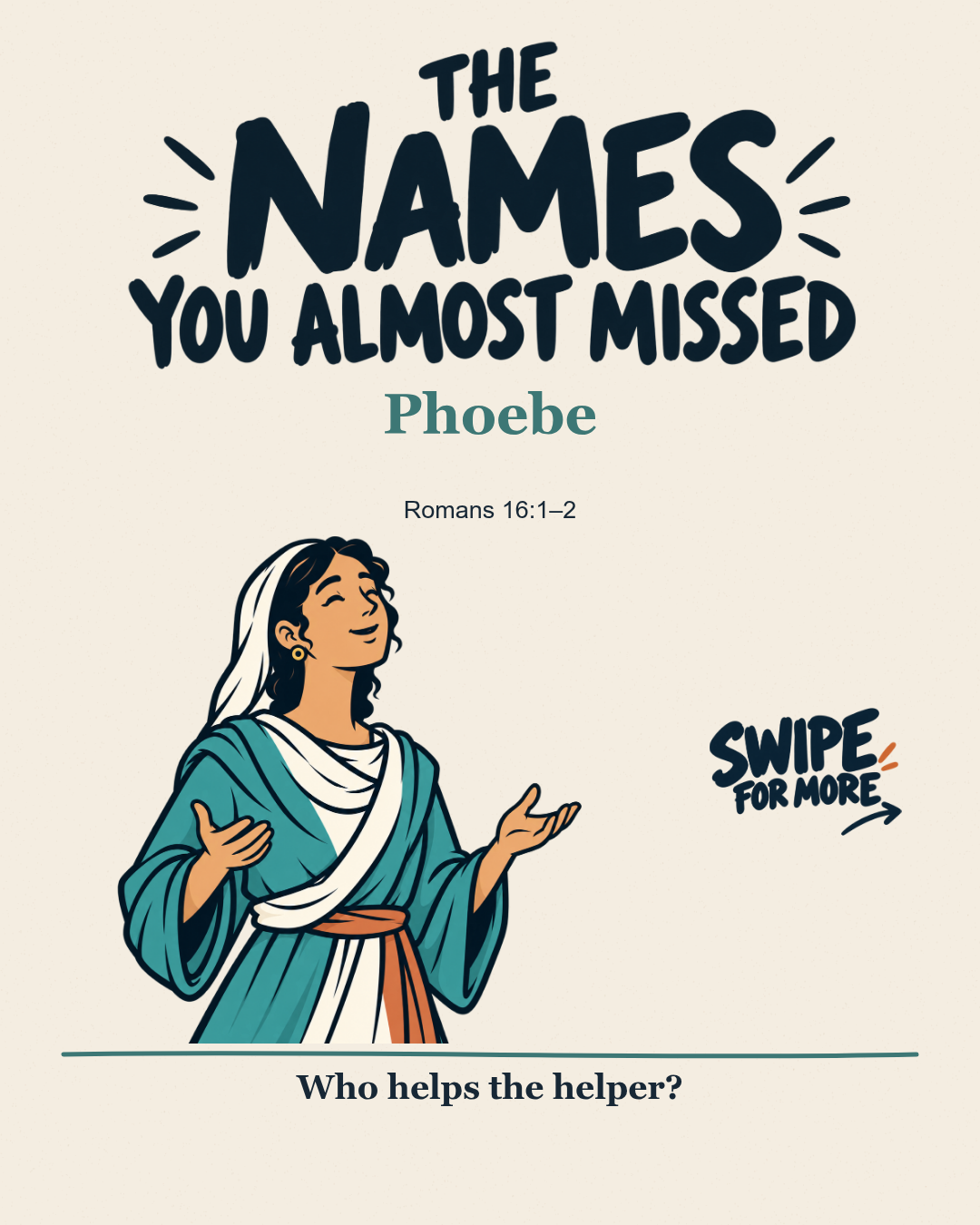
Who helps the helper?
Phoebe • Romans 16:1–2
Illustrative portrait
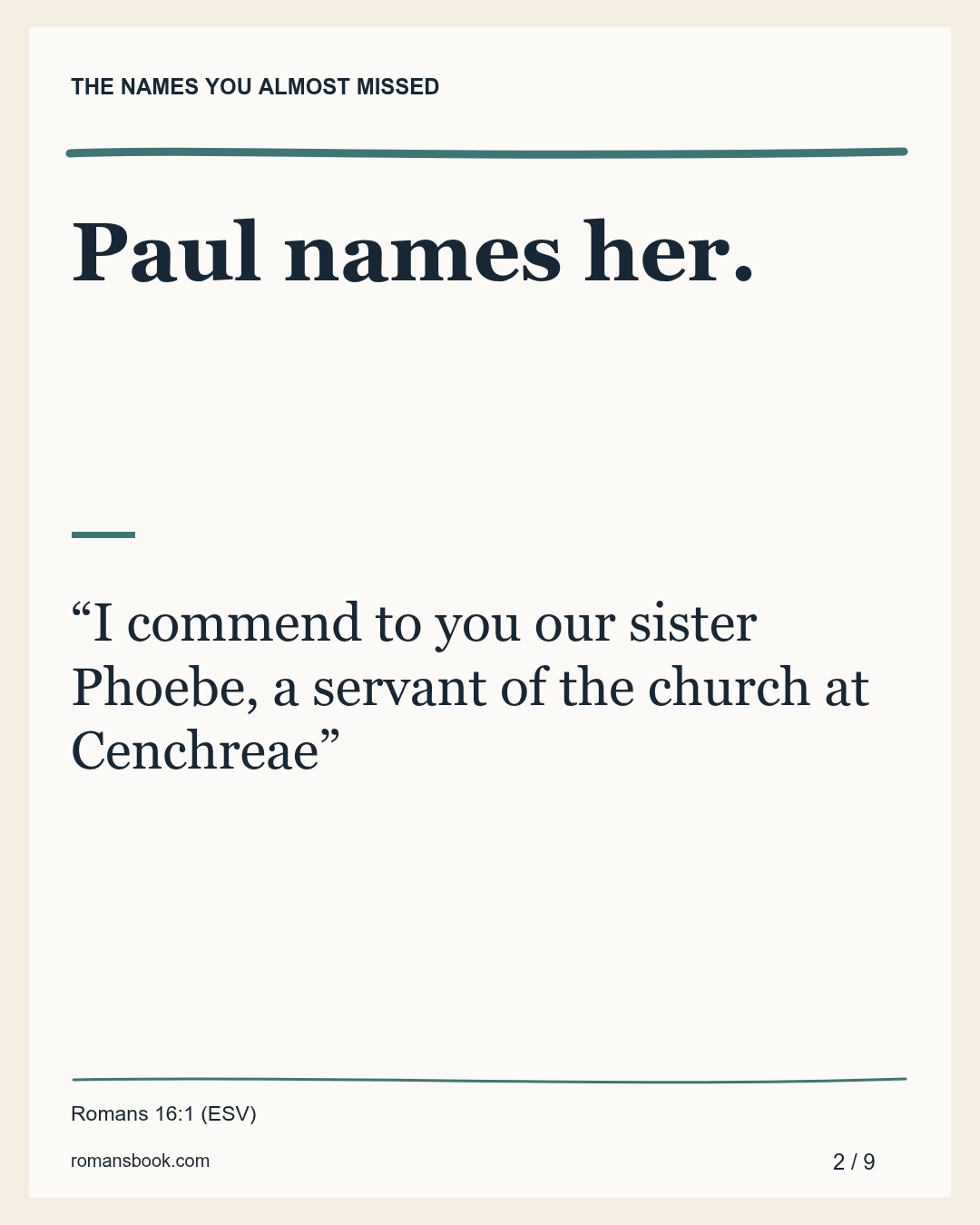
Paul names her.
“I commend to you our sister Phoebe, a servant of the church at Cenchreae”
Romans 16:1 (ESV)
Many people. Paul included.
Paul describes Phoebe as a patron of many. Then he includes himself among those she has helped.
Romans 16:2 • paraphrase
Now, help her.
Paul asks the Roman believers to welcome Phoebe in the Lord and assist her in whatever she needs from them.
Romans 16:2 • paraphrase
A church by the harbor.
Cenchreae was Corinth’s eastern port. Phoebe’s service belongs to a real community. We don’t know her occupation or the details of her assistance.
Romans 16:1–2; Korka & Rife, 2012
Welcome has a name.
Romans calls believers to welcome one another as Christ welcomed them. Here Paul names a sister the church should receive.
Read Romans 15:7 beside 16:1–2
Let care travel both ways.
Think of someone who regularly helps others. What would it look like to offer that person practical help this week?
A question for our life together
Whose name comes to mind?
If you’d like, share a first name and one specific way that person has helped you. A private thank-you matters, too.
Names matter because people matter.
Explore the book
Romans — The Gospel of God and the People He Calls by Name. Landon Key. romansbook.com
Explore the book • romansbook.com