




Swipe to explore the illustrated story.
Saved stories stay on this device.
Read the story
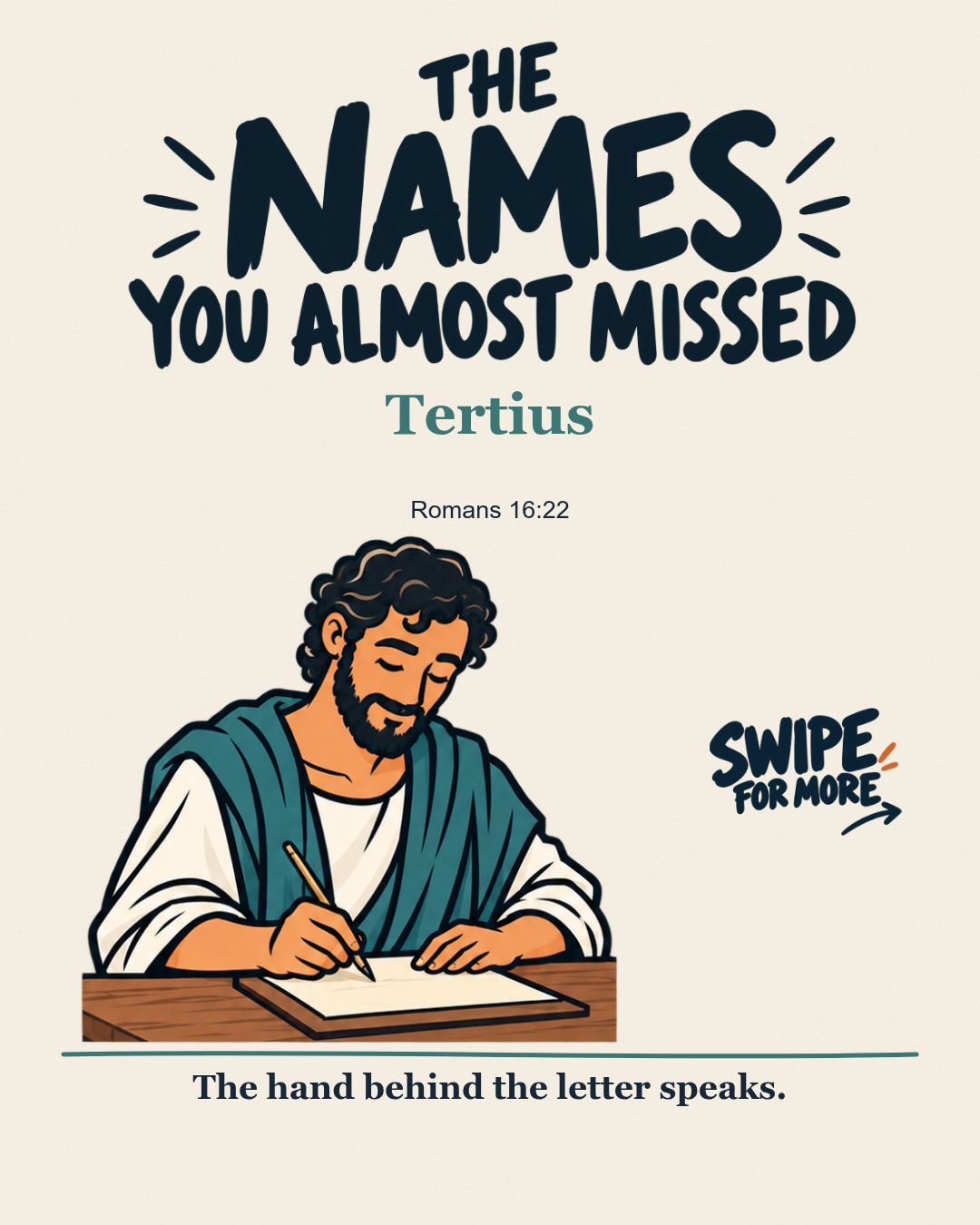
The hand behind the letter speaks.
Tertius • Romans 16:22
Illustrative portrait / group
Read the greeting.
“I Tertius, who wrote this letter, greet you in the Lord.”
Romans 16:22 (ESV) • excerpt
He introduces himself.
Tertius identifies himself as the one who wrote the letter and offers his own greeting in the Lord. Paul’s letter makes space for this voice.
Romans 16:22; see source notes
Writing is part of the work.
The verse supports a scribal contribution. It does not describe the process in detail or tell us how much freedom Tertius had in wording the letter.
Romans 16:22; see source notes
His name does not prove his status.
Tertius is a Latin ordinal name. It does not establish that he was an enslaved person, the third child or related to Quartus.
Historical context and limits • source notes
Read it within the larger letter.
Different contributions can serve one work. Here the person performing the writing is recognized within the communication itself.
Romans 12:4–8; 16:22 • comparison
Remember someone whose care mattered.
Thank someone whose careful work helps a message reach others: an editor, translator, organizer or another person you actually know.
A present-day invitation
Whose name comes to mind?
Who does work behind the scenes that helps others hear or understand? Share a first name and a true memory, if you’d like. A private thank-you matters, too.
Names matter because people matter.
Explore the book
Romans — The Gospel of God and the People He Calls by Name. Landon Key. romansbook.com
Explore the book • romansbook.com