Beautiful Feet · 1:25 film

Mary Magdalene

Called by name and sent with hope

Read the narration

Mary Magdalene stood outside the tomb, weeping. She'd come while it was still dark and found the stone moved. She told Peter and another disciple that the Lord had been taken away.

Now she looked into the tomb and saw two angels. When they asked why she was crying, she said she didn't know where her Lord had been laid.

She turned and saw Jesus, but didn't recognize him. She thought he was the gardener.

Jesus said, Mary. She recognized her teacher. The Lord she was seeking was alive. He gave her a message for his brothers, and she went to the disciples with the news that she'd seen him.

Luke also tells us Mary had received healing and helped support Jesus' ministry. The woman who needed care had become someone with good news to carry.

Romans directs our hope to Christ who died and rose again, and whose love holds us through suffering.

If grief has left you struggling to find words, Mary's story can help you look toward Christ. Her tears were real when Jesus met her. The risen Lord gave her hope through his own presence and his word.

Our Savior is alive. His mission includes people who have wept. May his resurrection give you courage to encourage someone else with the hope he's given you.

Next in Beautiful Feet

Althea Brown Edmiston →

Go deeper

History & further reading

Return to the story ↑

The risen Jesus calls Mary by name

John 20:1–18 follows Mary Magdalene from the discovery of the open tomb through her grief to her encounter with the risen Jesus. She recognizes him when he addresses her by name, and she carries his message to the disciples. The announcement grows out of a personal encounter with the living Lord.

John’s account does not identify Mary with other women who share her name. The scene is enough to see her grief, recognition and witness without combining distinct biographies.

Later Christian art bears witness to the church’s long reflection on this encounter. Such images can enrich that history of reception while remaining distinct from evidence about Mary’s appearance or the physical arrangement of the garden.

From the historical record

Photographs, art & documents

Open an image to look more closely. Dates and captions distinguish historical records from later interpretations.

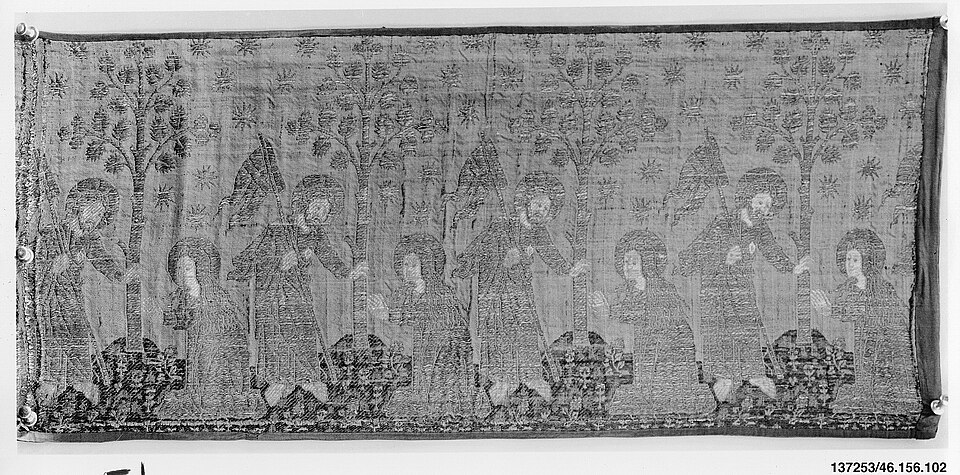
Woven textile border with a repeated Noli Me Tangere motif of standing and kneeling figures.View full image ↗

Noli Me Tangere, an early fifteenth-century Italian textile from Florence or Siena. The repeated motif interprets the encounter in John 20; it is not a first-century likeness.

Maker unknown · The Metropolitan Museum of Art, Open Access · via Wikimedia Commons

Historical image