Beautiful Feet · 1:25 film

Florens Radewijns and the prepared page

The prepared page and the open door

Read the narration

Before a book could be copied, somebody had to get the pages ready. In medieval Deventer, Florens Radewijns shared that work with the Brethren of the Common Life.

Thomas a Kempis remembered Florens smoothing parchment and ruling lines for the copyists. Florens also helped read and correct the finished books. The household's work helped support its shared life and care for people in need.

People came to the house for counsel, too. Thomas described the interruptions and remembered a phrase Florens used: Once more for the sake of God. He could make room for the visitor or arrange another time.

When we welcome people, we also need wisdom about the responsibilities we've already been given. We can share the work and receive help ourselves.

Romans places our different gifts within one body in Christ. We serve because God has shown us mercy. First Peter calls us to use our gifts with the strength God supplies.

Think of someone whose careful work made your own service possible. Thank that person by name. A prepared room or a thoughtful conversation can become care for someone Christ loves.

His mercy comes before our service. We offer these ordinary acts to him because he's already welcomed us by grace.
Next in Beautiful Feet

Mary Magdalene →

Go deeper

History & further reading

Return to the story ↑

Making time beside the prepared page

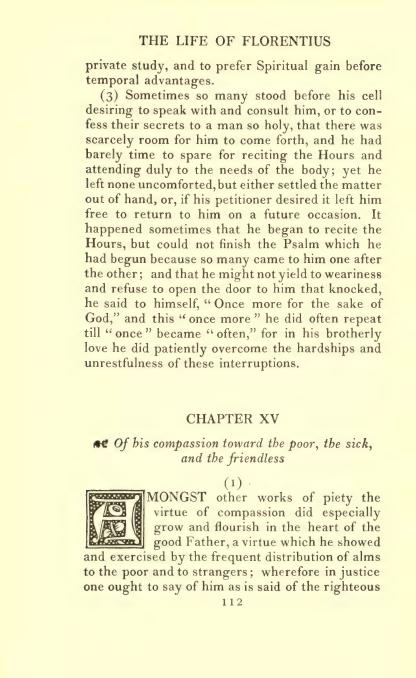
Thomas à Kempis’s Life of Florentius describes Florens Radewijns preparing parchment and correcting books, then attending patiently to people who interrupted him. In chapter XIV, paragraph 3, the biography attributes the phrase “Once more for the sake of God” to Florens as he receives another interruption.

The attribution comes from this admiring biography, not an autograph quotation or proof that Florens coined the words. J. P. Arthur’s 1905 translation places the passage on printed page 112. Its value lies in the particular remembrance of practical work alongside personal availability.

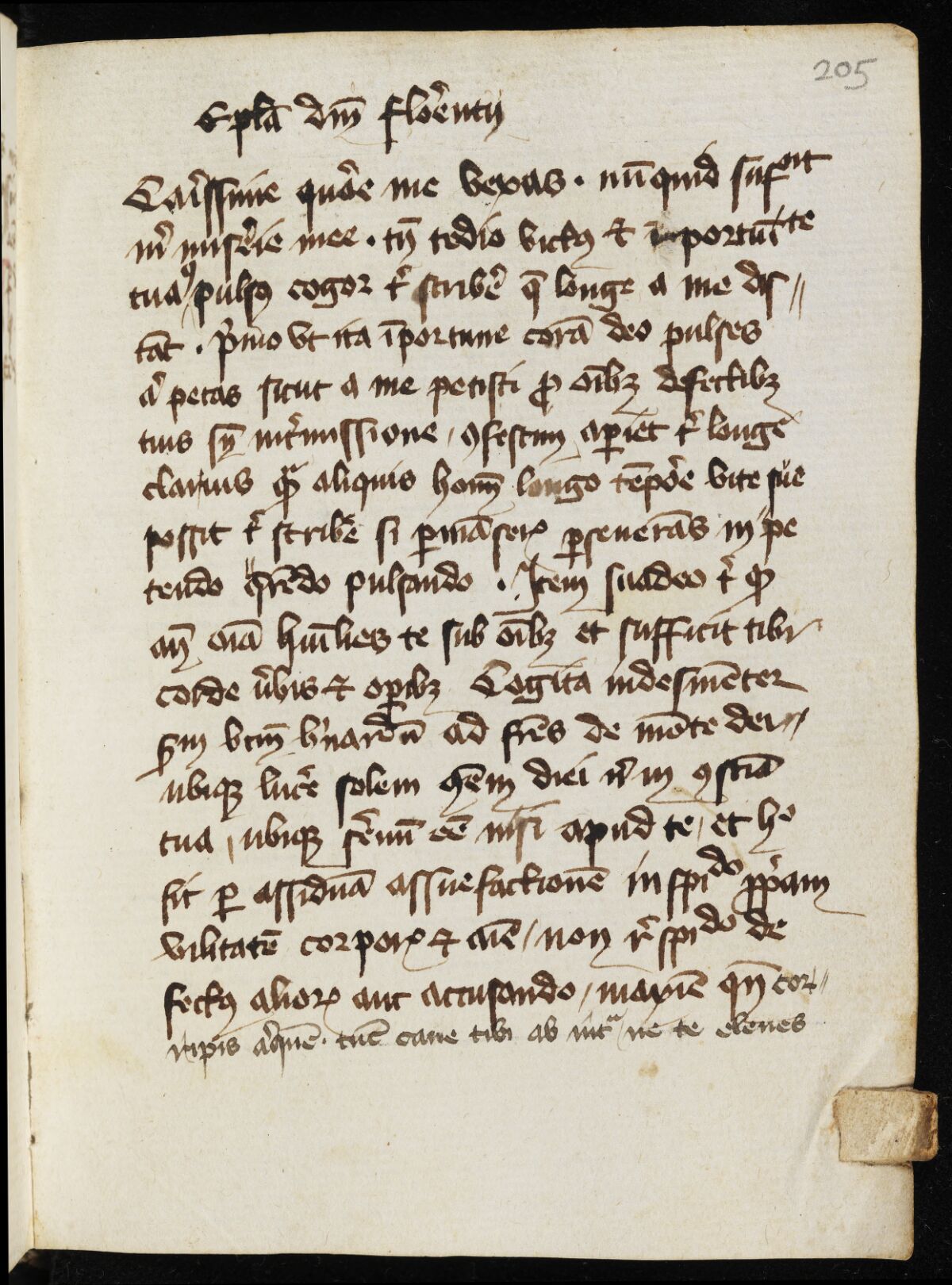
A surviving fifteenth-century copy of a letter attributed to Florens offers a different kind of connection with his written legacy. It is not his handwriting or the page he is said to have prepared in the story. These documents let us encounter both written work and a remembered life of care.

From the historical record

Photographs, art & documents

Open an image to look more closely. Dates and captions distinguish historical records from later interpretations.

Folio 205r of a fifteenth-century manuscript copy of a letter attributed to Florens.View full image ↗

A letter attributed to Florens, copied in the first half of the fifteenth century. Basel A X 92, folio 205r. This is not his autograph or the prepared page described in the biography.

Universitätsbibliothek Basel · e-codices
Printed page 112 of J. P. Arthur’s translation of the Life of Florentius.View full image ↗

The attributed phrase appears in chapter XIV, paragraph 3, on printed page 112 of the 1905 English translation. This later printed page is distinct from the manuscript copy shown alongside it.

Thomas à Kempis · translated J. P. Arthur · Kegan Paul, 1905 · Kelly–University of Toronto / Internet Archive

Historical image