


Swipe to explore the illustrated story.
Saved stories stay on this device.
Read the story
A name held in Christ.
Rufus • Romans 16:13
Illustrative portrait / group
Read the greeting.
“Rufus, chosen in the Lord”
Romans 16:13 (ESV) • excerpt
Chosen in the Lord.
Paul greets Rufus with this description. Romans does not give him an office or tell us that he matters more than the other believers being greeted.
Romans 16:13; see source notes
His mother is remembered, too.
Paul also greets Rufus’s mother and says she has been a mother to him. Her care is a distinct part of this greeting.
Romans 16:13; see source notes
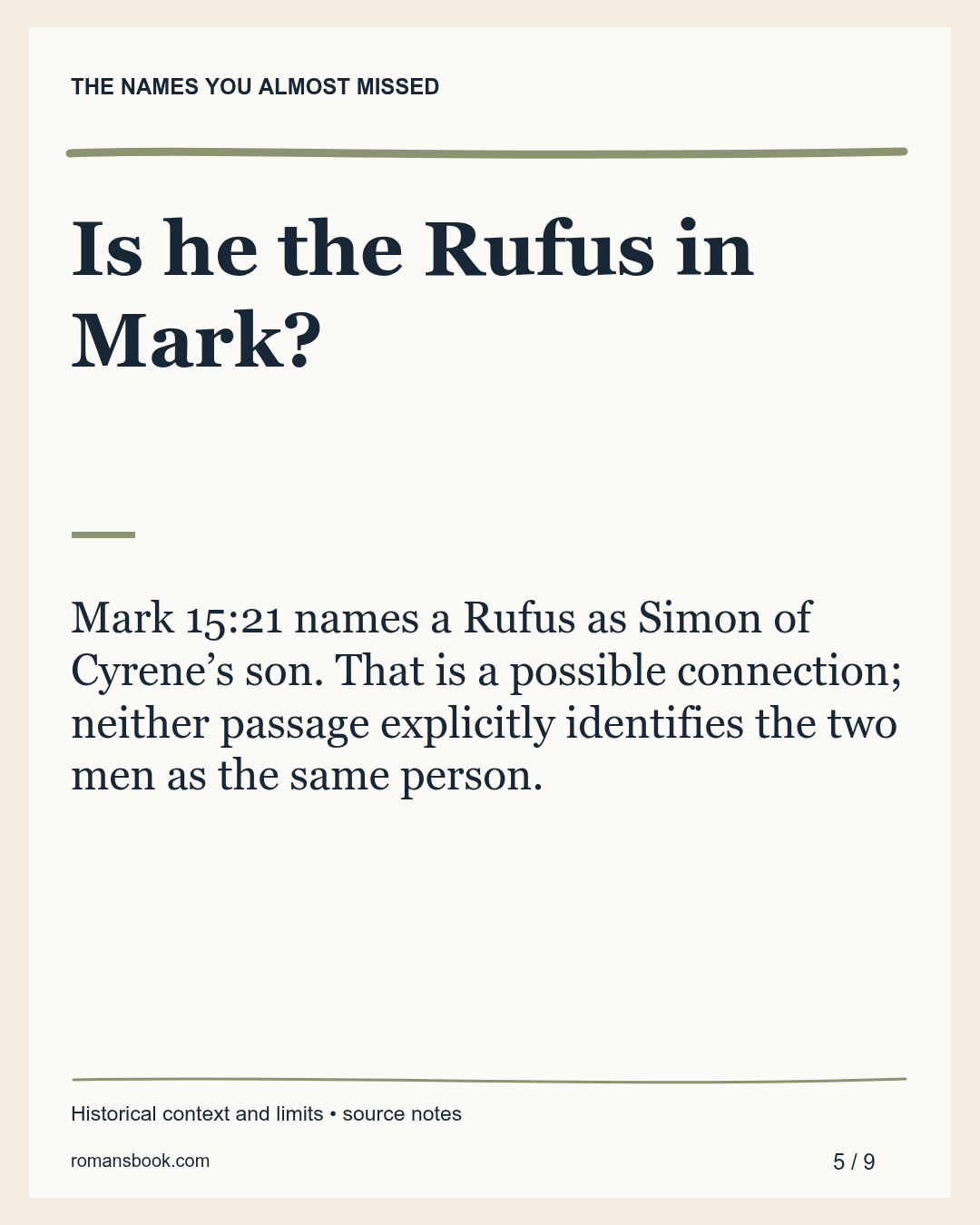
Is he the Rufus in Mark?
Mark 15:21 names a Rufus as Simon of Cyrene’s son. That is a possible connection; neither passage explicitly identifies the two men as the same person.
Historical context and limits • source notes
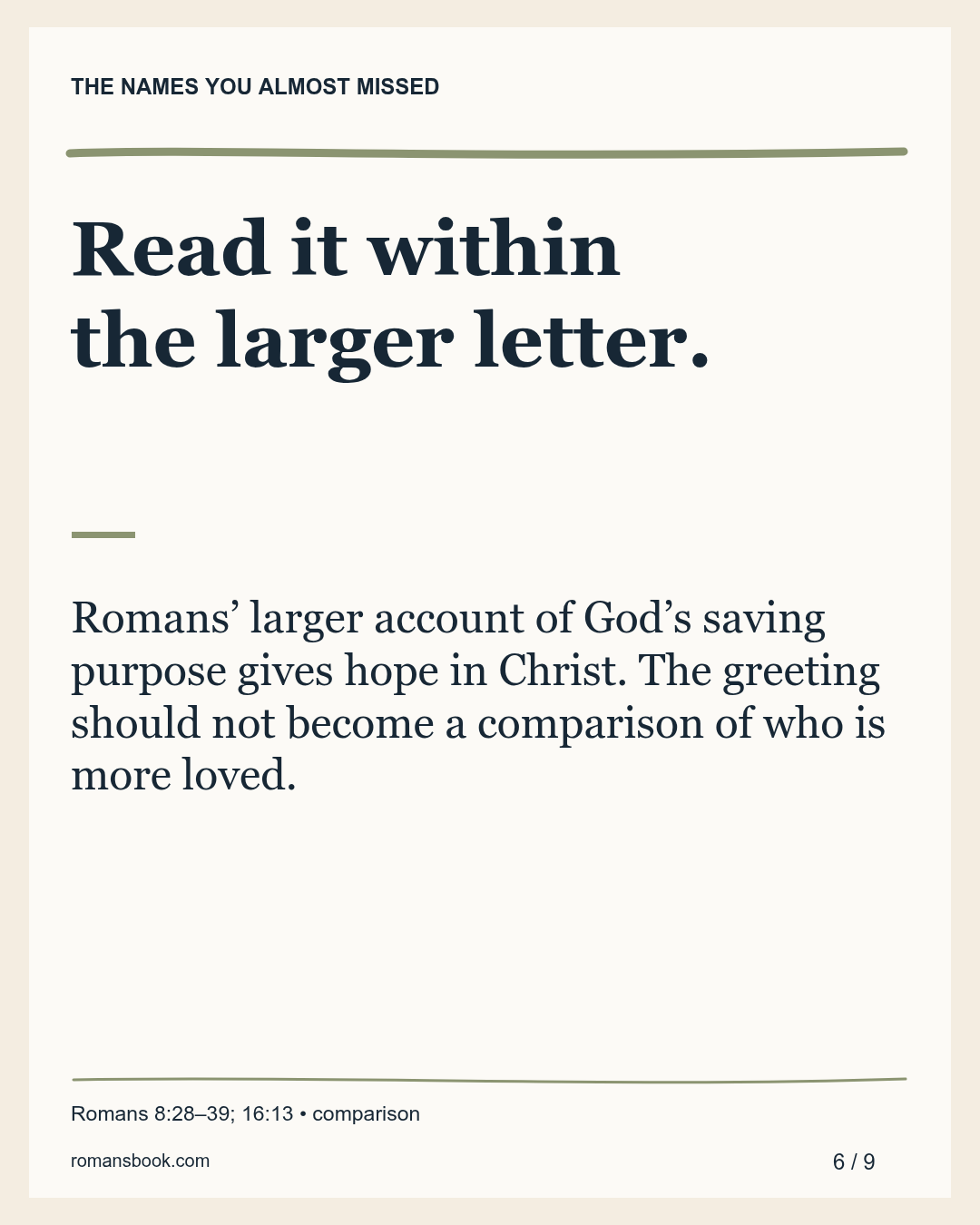
Read it within the larger letter.
Romans’ larger account of God’s saving purpose gives hope in Christ. The greeting should not become a comparison of who is more loved.
Romans 8:28–39; 16:13 • comparison
Remember someone whose care mattered.
Remember a person whose belonging in Christ has encouraged you, and the people whose care has supported their life.
A present-day invitation
Whose name comes to mind?
Who helped you learn to rest in belonging to Christ? Share a first name and a true memory, if you’d like. A private thank-you matters, too.
Names matter because people matter.
Explore the book
Romans — The Gospel of God and the People He Calls by Name. Landon Key. romansbook.com
Explore the book • romansbook.com